Knowledge Architecture / 2025-06-20
SPARK: A Knowledge Architecture for AI-Native Work
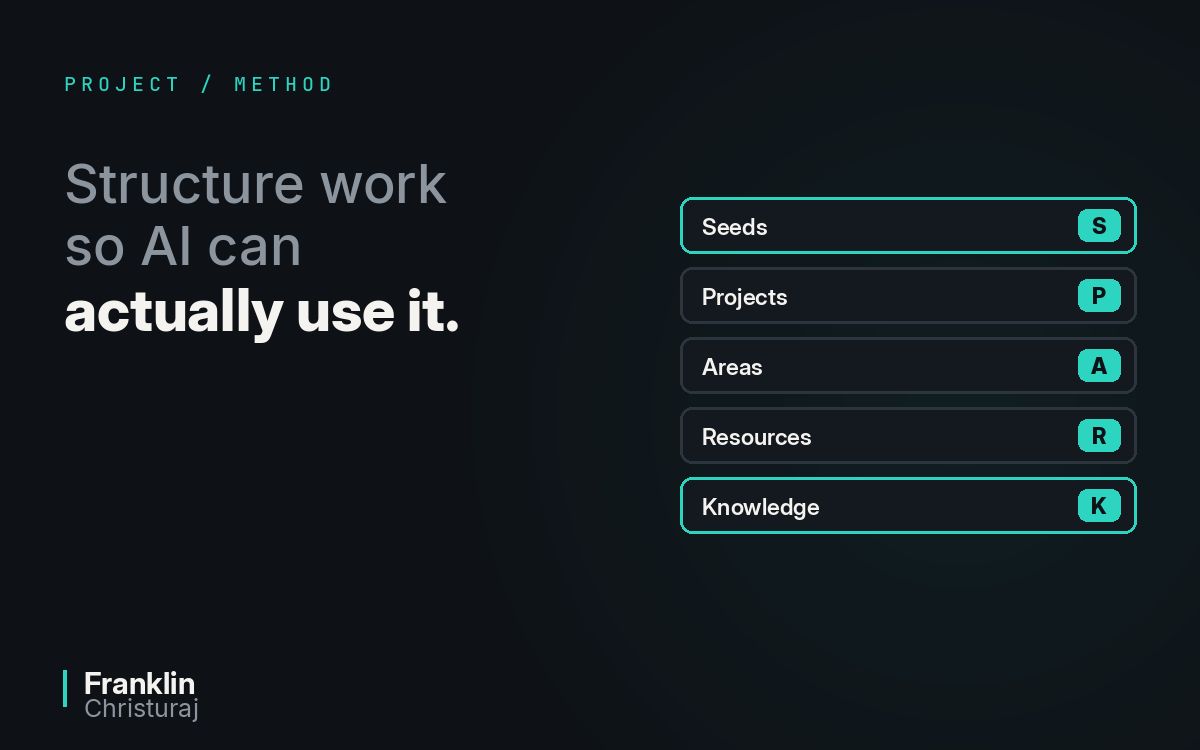
A personal knowledge system (Seeds, Projects, Areas, Resources, Knowledge) designed so both a human and an agent can navigate it.
Role
Designer. Schema, conventions, templates, linking rules.
Outcome
2,000+ notes across 8 domains under one convention. Time-to-context on any project cut to under a minute for both human and agent.
A knowledge base most people build is a junk drawer. Everything's in there. Nothing's findable.
SPARK is the opposite. Five zones, each with one job: Seeds capture, Projects execute, Areas sustain, Resources reference, Knowledge distills. Think of it like a kitchen where every tool has a drawer, so you never hunt mid-service.
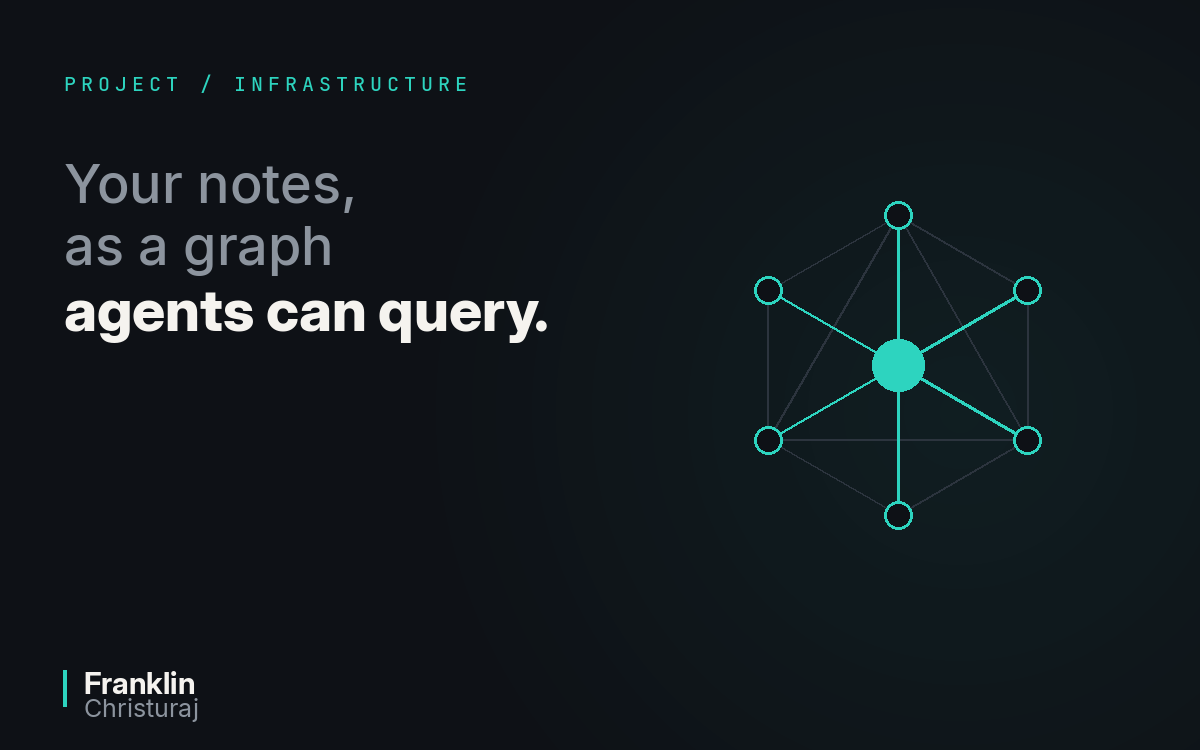
The design constraint that made it different: it had to be legible to an agent, not just to me. Consistent frontmatter, typed links, predictable structure. That discipline is what later let Ziksaka read it as a graph.
The convention I was most tempted to skip was mandatory frontmatter on Seeds (the throwaway capture zone). It felt like friction on the exact step that's supposed to be fast. But the moment Seeds could ship without a type and a source, the agent couldn't trust any of them, and the whole zone became noise. The rule isn't bureaucracy. It's the contract that makes the agent layer possible.
The system isn't the folders. It's the contract every note honors, so anything (human or agent) knows where to look.